
Forestry mulching services in Chicagoland has become one of the most efficient ways for property owners to clear overgrown land without tearing up their property. If you own a few acres, you’ve probably watched your property slowly disappear behind a wall of brush, buckthorn, and saplings you didn’t plant.
It happens fast. One year there’s a clearing. The next, you can’t see your fence line.
Traditional land clearing meant bringing in bulldozers that tore up the ground or spending weeks cutting, piling, and hauling debris. Forestry mulching changed that. It’s faster, cleaner, and leaves your property in better shape than it started.
Here’s how it works and when it makes sense.
What Forestry Mulching Actually Does
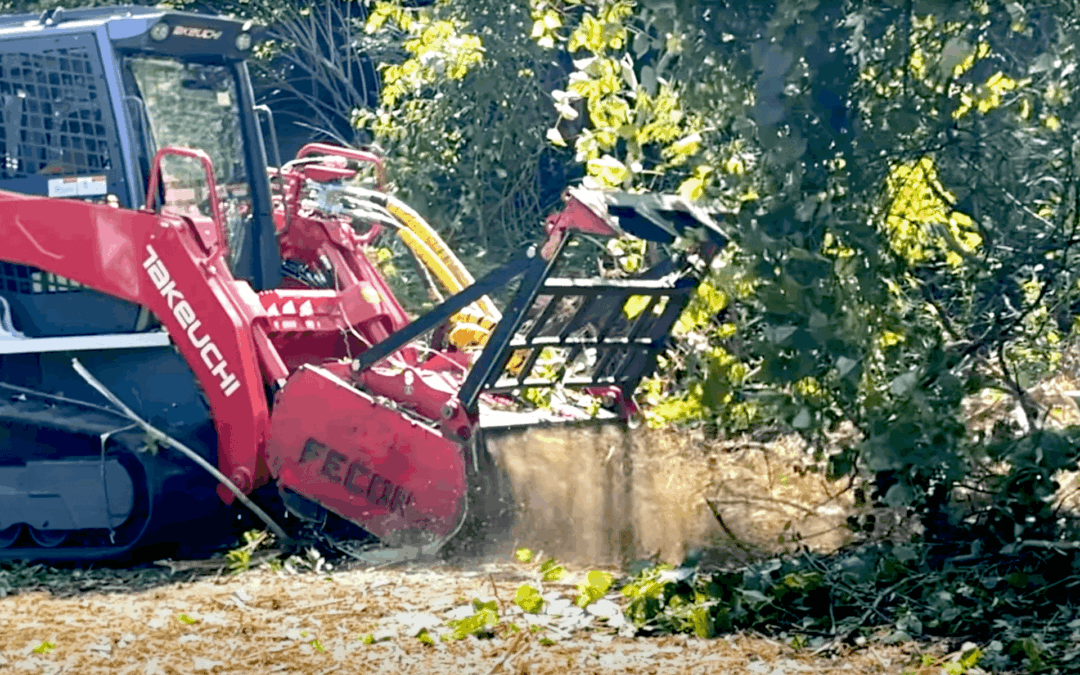
Forestry mulching uses a single machine—a skid-steer with a specialized mulching head—to cut, grind, and shred vegetation into mulch on the spot. If you’re new to the term, here’s a simple breakdown of what forestry mulching is and when to use it.
No piling. No burning. No hauling truckloads of brush to a landfill.
The machine processes everything right where it stands, leaving behind a layer of organic mulch that protects the soil and suppresses regrowth.
What It Can Clear
- Thick brush and undergrowth
- Small to medium trees (up to 6–8 inches)
- Invasive species like buckthorn and honeysuckle
- Fence lines and property edges
- Overgrown trails or access paths
If your goal is to open up your land without stripping it bare, forestry mulching does that in a single pass.
Why It Works So Well Here
Chicagoland properties deal with heavy clay soils, aggressive invasive plants, and unpredictable weather that turns bare ground into a mud pit.
Forestry mulching handles these challenges better than traditional clearing because:
It doesn’t tear up the soil. Bulldozers rip out everything—roots, topsoil, structure. A mulcher cuts vegetation at ground level, leaving root systems intact and your soil stable.
It leaves instant ground cover. The mulch layer protects against erosion during heavy rains, keeps weeds from taking over, and breaks down naturally over time to enrich the soil.
It’s faster and less disruptive. Most residential projects are done in a day. No weeks of chainsawing. No debris piles sitting in your yard.
What You’re Left With
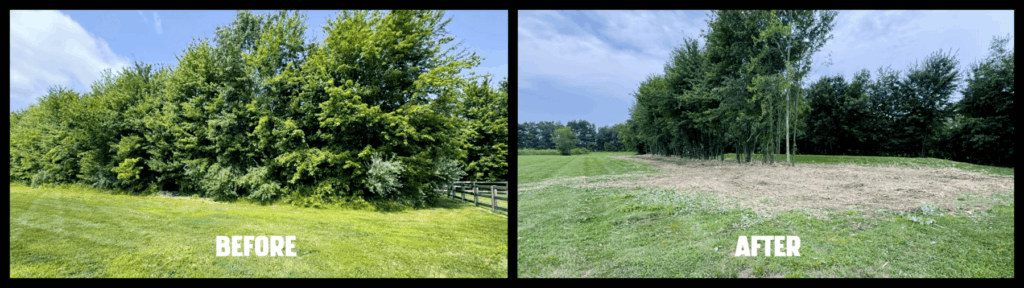
After mulching, your property won’t look like a lawn. It’ll look like managed woodland.
You’ll have:
- A clean, walkable surface
- No piles of logs or brush
- A natural mulch layer that settles and darkens over time
- Clear sightlines and usable space
The mulch isn’t just cosmetic. It controls erosion, holds moisture, and makes it harder for invasives to bounce back.
Common Reasons Property Owners Call
Most people reach out when their land has crossed the line from “a little wild” to “completely unusable.”
Overgrown lots. Vacant land or wooded sections that haven’t been touched in years.
Fence line clearing. Brush pushing against property lines, making it impossible to install or maintain fencing.
Invasive species removal. Buckthorn, honeysuckle, and other aggressive growth choking out native trees.
Trail creation. Carving paths for walking, ATVs, or property access.
Lot preparation. Cleaning up land before building, selling, or leasing.
Forestry mulching allows selective clearing. You keep the trees you want and remove everything else.
One of the most common concerns we hear from homeowners is whether forestry mulching is safe near homes, trees, and property lines. We explain this in detail in our guide to forestry mulching safety for residential backyards.
How It Compares to Traditional Clearing
Here’s the practical difference.
Forestry Mulching:
- Vegetation ground in place
- Minimal soil disturbance
- No debris removal needed
- Faster for brush and selective work
- Leaves a natural, usable surface
Traditional Clearing:
- Trees pushed over or dug out
- Stumps often left behind
- Requires hauling or burning
- More ground disruption
- Higher cleanup and restoration costs
If you’re managing land or reclaiming overgrown property, mulching is usually the better fit. If you’re prepping for major construction or grading, traditional methods might still be needed. For a deeper breakdown of costs, soil impact, cleanup, and real-world use cases, see our full comparison of forestry mulching vs traditional land clearing.
What the Process Looks Like
A typical forestry mulching job goes like this:
- Site walkthrough. We identify what you want to keep and what needs to go.
- Clearing begins. The operator works through the brush in a planned pattern.
- Vegetation is mulched on-site. You’ll see the transformation happen in real time.
- Final pass for cleanup. Any remaining material gets processed.
- Walkthrough to confirm the job’s done right.
Most residential projects wrap up in a single day, depending on size and density. For a step-by-step breakdown, see how the forestry mulching process works.
What Forestry Mulching Costs
There’s no one-size-fits-all price. Cost depends on:
- Total acreage or square footage
- How thick the vegetation is
- Tree size and type
- Terrain and access
- Whether you’re clearing everything or being selective
Most jobs are priced hourly or as a flat project rate after a site visit.
A professional contractor should walk your property, explain what’s realistic, and give you a clear estimate. If someone quotes you without seeing the land, that’s a red flag.
Is It Environmentally Responsible?
Compared to traditional clearing, yes.
Forestry mulching disturbs less soil, reduces erosion risk, and leaves organic material to decompose naturally. There’s no burning, no hauling debris to landfills, and no scarring the land.
It’s land management, not land removal.
What to Look for in a Contractor
Not every tree service does forestry mulching, and not every mulching contractor has the right equipment or experience.
Look for:
- Specialized mulching equipment (not just a brush hog)
- Full insurance
- Experience with residential and rural properties
- Clear communication about what they will and won’t clear
- Straightforward pricing after a site review
Equipment and experience matter, but so does working with someone who listens and explains the process clearly.
Ready to Take Your Property Back?
If your land has gotten away from you and you’re wondering whether forestry mulching is the right move, the best first step is a conversation.
At GrindForce Land Services, we specialize in forestry mulching and land clearing for property owners throughout Chicagoland and Northwest Indiana. We use professional-grade skid-steer equipment designed for efficient clearing with minimal ground disturbance.
We’ll walk your property with you, talk through your goals, and give you a clear picture of what’s possible.