
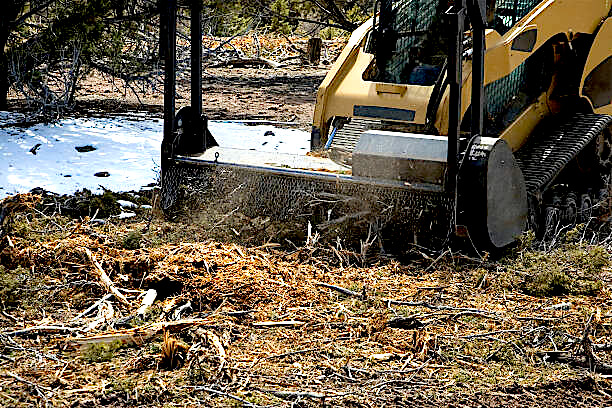
If you’re dealing with an overgrown lot in the Chicago suburbs or invasive brush taking over part of your property in Northwest Indiana, you’ve probably looked into forestry mulching.
It’s fast.
It’s clean.
And it doesn’t leave you with piles of debris to haul away.
But the next question is always the same:
“What’s this going to cost me?”
Let’s break it down in plain terms — no vague “it depends” answers. Below is what actually affects the price, what most homeowners should expect to pay, and how to know whether a quote is fair.
What Is Forestry Mulching (And Why It Affects Cost)
Forestry mulching uses a skid-steer equipped with a mulching head to grind brush, saplings, vines, and small trees into a layer of natural mulch. Everything stays on site.
- No burning
- No hauling
- Minimal soil disturbance
That efficiency is why forestry mulching has become the preferred land-clearing method for residential and rural properties across Illinois. But that same efficiency also means pricing depends heavily on site conditions, not just acreage.
If you’re new to the process, our guide on forestry mulching in Chicagoland explains how the equipment works and when mulching makes the most sense.
Average Forestry Mulching Cost in Illinois
For properties in Illinois and nearby Northwest Indiana, most professional forestry mulching projects fall into these general ranges:
- Per acre: $2,000 – $3,000+
- Hourly: $250 – $400
- Minimum job fee: $1,200 – $1,500
That wide range isn’t guesswork. It reflects real differences between properties — what’s growing there, how thick it is, and how easy it is to access.
What Affects the Cost of Forestry Mulching?
1. Density of Vegetation
This is the biggest cost driver.
- Light brush and scattered saplings are quicker and cheaper to clear
- Thick invasive growth like buckthorn, honeysuckle, or multi-flora rose takes longer and puts more wear on equipment
The denser the growth, the more passes the machine needs to make.
2. Size of the Area
Larger jobs often cost less per acre because of efficiency.
Clearing five acres is usually more cost-effective per acre than clearing a tight quarter-acre corner of a property. Small jobs still require the same equipment, transport, and setup time.
3. Terrain and Accessibility
Flat, open ground is straightforward. Costs increase when we’re dealing with:
- Steep slopes or ravines
- Wet or soft ground
- Tight backyard access
- Obstacles like fences, septic systems, or utility lines
Forestry mulching works well on uneven terrain, but careful operation takes more time.
Residential jobs often involve additional planning around homes, trees, and utilities, which is why we also explain how safety factors into forestry mulching for backyards.
4. Tree Diameter
Most skid-steer mulching heads are designed for brush and trees up to about 6–8 inches in diameter.
Larger material may require additional equipment or separate removal, which changes the pricing structure.
5. Cleanup and Finish Expectations
Forestry mulching leaves a layer of natural mulch — that’s the goal.
However, additional services like grading, stump grinding, or hauling material off site are usually separate line items and should be discussed upfront.
Hourly vs. Per-Acre Pricing: Which Is Better?
Most contractors price forestry mulching one of two ways:
Hourly pricing
- Works well for small or unpredictable jobs
- Transparent, but final cost depends on conditions
Per-acre pricing
- Common for larger, uniform properties
- Easier to budget, but usually includes a buffer for unknowns
A proper estimate should be based on seeing the property — not guessing from acreage alone.
What You Should Expect for the Price
A professional forestry mulching job should include:
- A site assessment before work starts
- Equipment sized appropriately for the job
- An experienced operator who works around obstacles carefully
- Minimal soil disturbance
- A consistent mulch layer that helps control erosion
You should also expect proof of insurance. Forestry mulching involves heavy equipment, and reputable operators carry proper coverage.
Hidden Costs to Clarify Upfront
Low quotes sometimes come with surprises. Before hiring, ask about:
- Travel or mobilization fees
- Stump grinding or tree removal outside mulching scope
- Grading or seeding after clearing
- Disposal fees if material is hauled away
Clear expectations prevent issues later.
Many of these issues come from poor planning, which we break down into common land clearing mistakes homeowners make.
When Forestry Mulching Is the Most Cost-Effective Option
Forestry mulching makes the most financial sense when:
- You’re clearing brush, saplings, and small trees
- You want material left on site for erosion control
- You need the job done quickly without weeks of cleanup
- You’re preparing land for trails, fence lines, pasture, or general use
It’s not always the cheapest option by the hour — but it’s often the cleanest and fastest, which reduces follow-up costs.
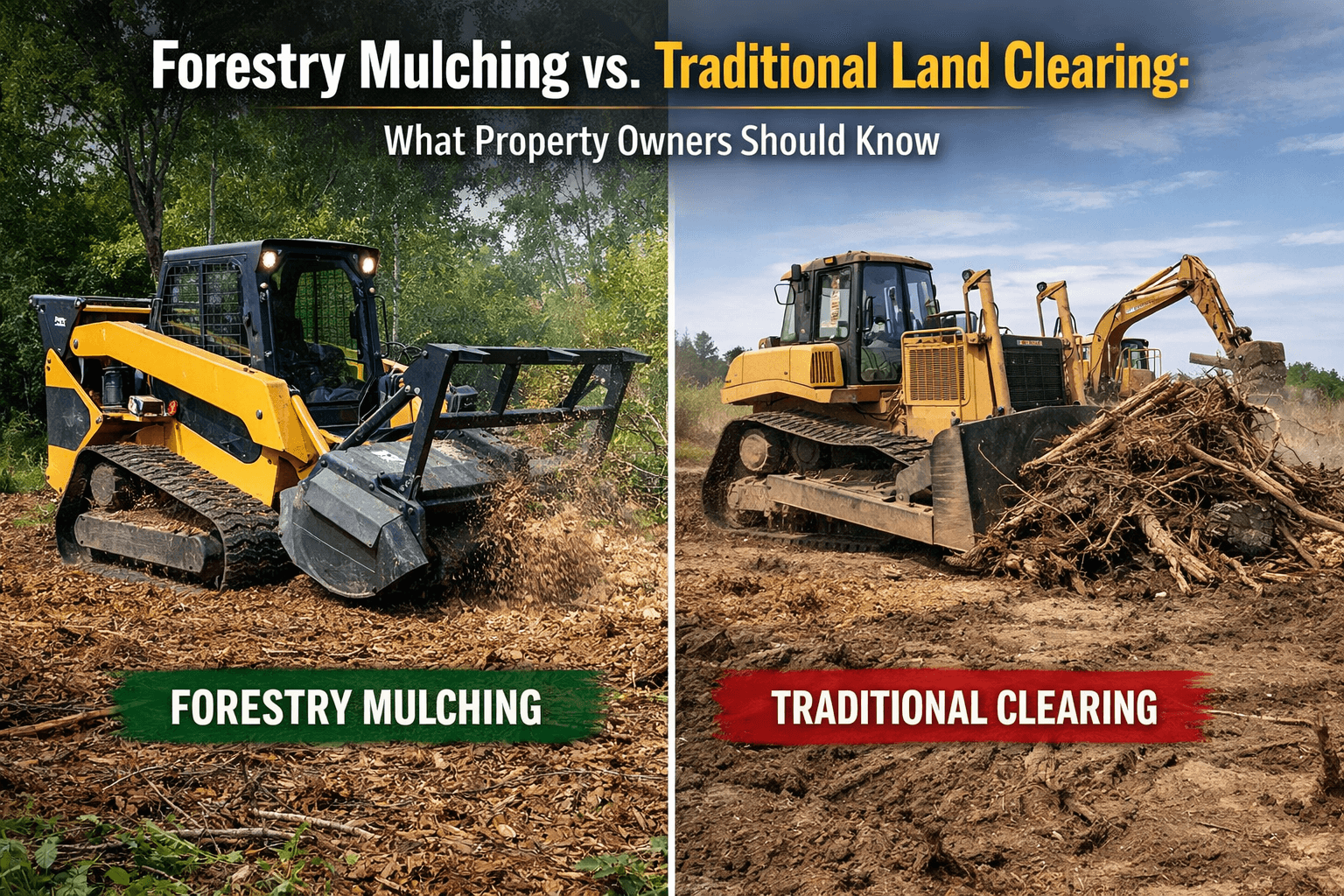
Cost differences often come down to the clearing method itself, which we explain in more detail in our guide on forestry mulching vs traditional land clearing.
How to Get an Accurate Estimate
Avoid phone quotes based only on acreage. A real estimate considers conditions.
Be ready to share:
- Approximate property size
- What’s growing there
- Access points and obstacles
- Your end goal for the land
Photos help, but an on-site walkthrough provides the most accurate pricing.
Final Thoughts
Forestry mulching isn’t a one-size-fits-all service, and pricing shouldn’t be either. The cost depends on what you’re clearing, how accessible it is, and how you want the finished area to look.
If you’re in Illinois or Northwest Indiana and want a clear, honest estimate based on your actual property — not a guess — the next step is simple.
Contact GrindForce Land Services for a free, no-obligation estimate and real answers about your project.