
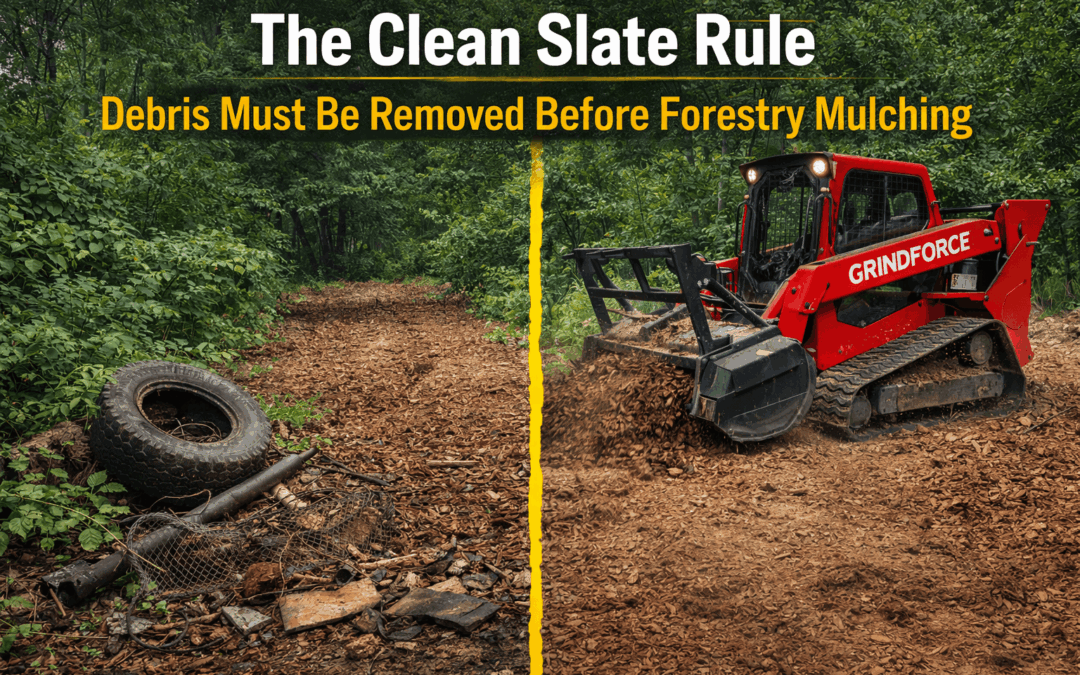
If a property is overgrown, there's usually more than brush hiding in it.
Old fencing. Wire tangled in saplings. Tires dumped in a wooded corner years ago. Scrap metal from a burn pile that got buried under a decade of leaves.
From the road, it all looks like vegetation. Up close, it's a different situation.
Before any forestry mulching project begins, we follow one non-negotiable protocol: the ground has to be clear of hidden hazards before the mulching head goes to work.
We call it the Clean Slate Rule.
Why Hidden Debris Is a Real Problem
Forestry mulching equipment is built to process organic material. Brush, saplings, invasive growth, trees up to around 8 inches in diameter. That's what the machine is designed to handle. This is why understanding how forestry mulching works is critical before starting any land clearing project.
It is not designed for:
- Metal fence posts or chain link
- Barbed wire wrapped around tree trunks
- Tires or rubber
- Concrete chunks
- Buried construction debris
When a mulching head hits metal or rubber at operating speed, the damage is fast and expensive. Cutting teeth get destroyed. The rotor can take a hit. The job stops while repairs happen.
Beyond equipment damage, the finished surface suffers. Shredded metal mixed into soil mulch is not a clean result. It's a contaminated one.
The Clean Slate Rule exists to prevent both outcomes.
Where the Hazards Usually Hide
Properties in Chicagoland and Northwest Indiana carry a lot of history. Fence lines get abandoned and overgrown. Previous owners dump scrap in wooded areas. Brush piles accumulate over old burn sites with buried remnants underneath.
The most common problem areas we encounter:
Old fence lines. Wire and T-posts disappear into saplings over time. What looks like a brushy fence row often has metal running through it.
Wooded backyards. It's common to find construction debris, tires, or household scrap that got pushed into a wooded corner and forgotten.
Former farm or rural properties. Agricultural wire, metal roofing scraps, and old equipment parts often end up buried in brush on acreage that has changed hands.
Brush piles and burn sites. Large accumulated piles frequently contain dirt, rocks, and non-organic debris mixed in with the wood. Running a mulching head through them blindly is a risk.
How the Protocol Works
Step One: Walk the Property First
We do not quote jobs over the phone. Every project starts with a site visit.
During that visit, we are looking at terrain, access, vegetation density, and any visible signs of debris or buried hazards. If the brush is too thick to assess from the surface, we note it and factor it into the plan.
This is not a formality. It is the step that makes accurate quoting possible. Here’s what to expect during a forestry mulching site visit and estimate.
Step Two: Separate the Scope If Needed
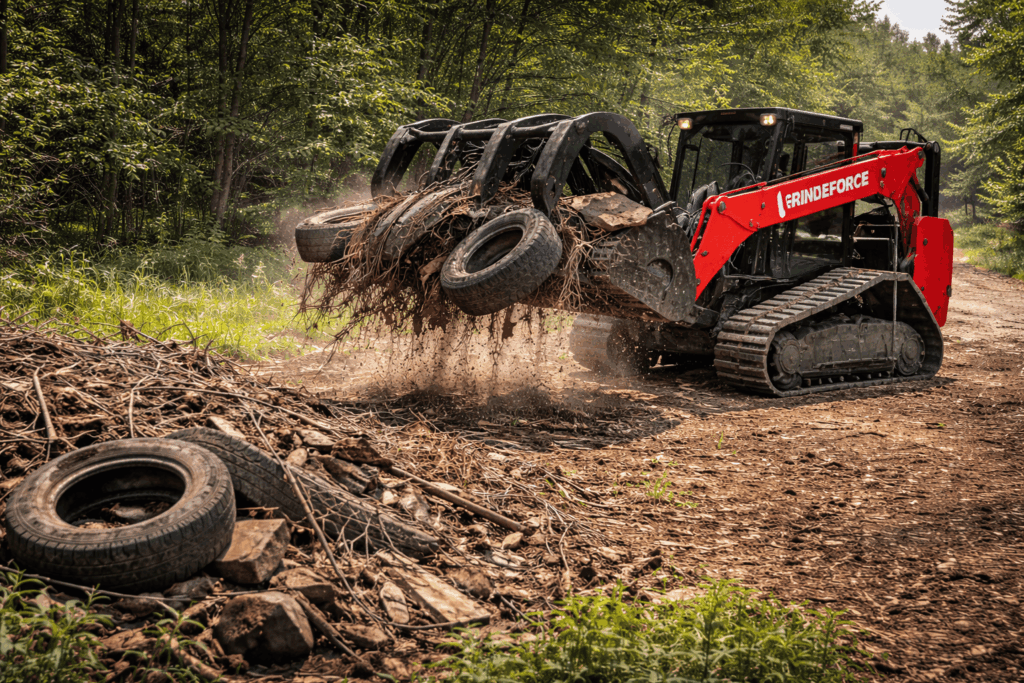
When debris is present, the job becomes a two-step process.
First, we extract and consolidate the non-organic material using a root grapple attachment. This tool lets us sort through accumulated piles, pull out tires and metal, and stage the debris in a designated area on the property. It handles what the mulching head should not touch.
Once the ground is clear, the mulching head goes to work on the vegetation.
Keeping these steps separate protects the equipment and protects the finished surface.
Step Three: Quote It Transparently
If debris removal is required, it is scoped and priced separately from the mulching work. You see exactly what each phase covers before anything starts.
No bundled pricing that obscures what you're paying for. No mid-project surprises.
Why This Protects Your Property
The Clean Slate Rule is not only about protecting equipment. It protects the result you're paying for.
When forestry mulching is done on a properly cleared surface:
- The mulch layer is clean organic material, not shredded metal fragments
- The finished surface is consistent and walkable
- There's no buried wire left tangled under the mulch layer
- Future use of the area isn't complicated by debris surfacing later
The goal of every project is a usable, stable property. That outcome is only possible when the base layer is clear.
What This Means for Project Scope
Forestry mulching is a precision clearing method. It works best on what it is designed for: vegetation.
Properties that are primarily brush, saplings, invasive growth, or fence line overgrowth move efficiently. One machine processes the material in place. No hauling. No burn piles. Clean result. Learn more about our forestry mulching services in Chicagoland and Northwest Indiana and what types of properties we typically clear.
Properties with significant debris require a different first step. Being upfront about that keeps the project on track and keeps pricing accurate for both sides.
It also helps identify situations that are better suited for a demolition or excavation contractor. Mulching is not a landfill solution. Knowing the difference early saves everyone time.
What You Can Do Before We Arrive
If you are considering a clearing project, a quick walk of the area helps.
Look for obvious signs of debris before requesting an estimate:
- Old fencing or visible wire in the brush
- Tires or scrap metal
- Large rocks or concrete
- Evidence of old burn piles
If you know debris is present, mention it when you reach out. It helps us plan the right equipment combination and avoids surprises during the site visit.
The Bottom Line
Forestry mulching clears land efficiently when the conditions are right. The Clean Slate Rule makes sure those conditions exist before any work begins.
At GrindForce Land Services, every project starts with a property walk. We assess vegetation, terrain, debris, and access before giving a clear, itemized quote.
If you have an overgrown property in the Chicagoland area or Northwest Indiana and want to know what's actually under that brush, the first step is a site visit.
Reach out to request a free estimate. We will walk the property with you, explain what we find, and give you a straight answer on what clearing it will take.