
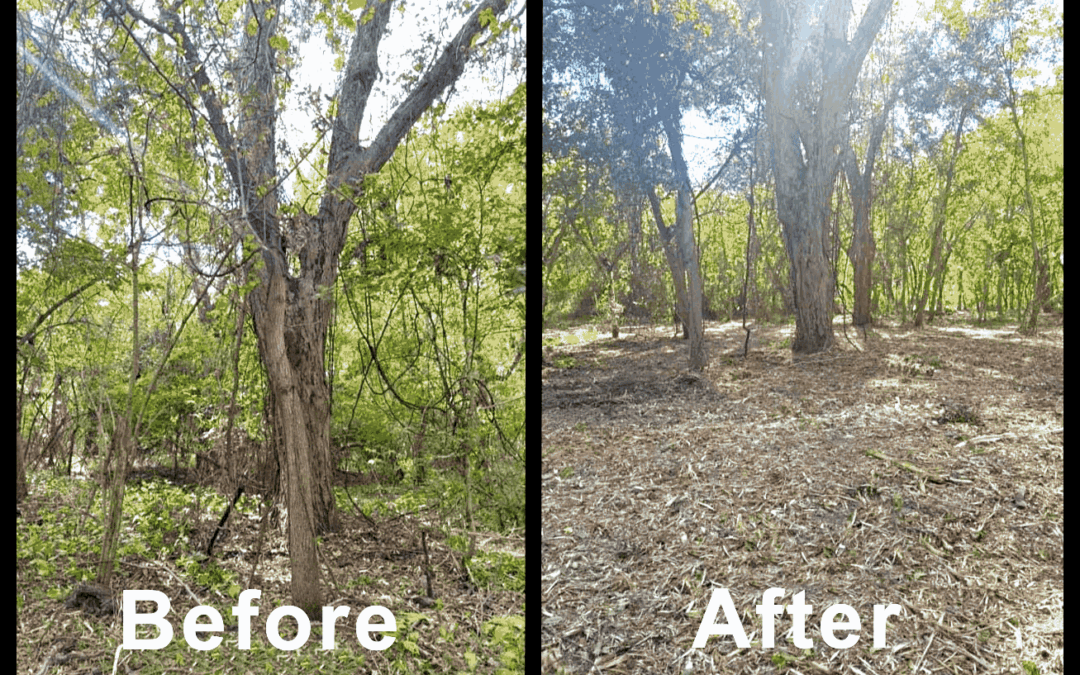
Forestry mulching is a land-clearing method that cuts and processes brush, invasive growth, and small trees into mulch on the same site. A high-flow skid-steer and mulching head handle the cutting and processing in one operation, so most projects do not require burn piles or hauling.
For homeowners and acreage owners in Chicagoland and Northwest Indiana, it is often a practical way to reclaim overgrown ground while preserving selected trees and limiting soil disruption.
Forestry Mulching in Simple Terms
Forestry mulching is a land-clearing method that grinds vegetation into mulch right where it stands.
Instead of cutting trees, hauling brush, and dealing with debris piles, one machine does everything in a single pass. It cuts, shreds, and spreads the material on-site as a protective ground layer.
That's the key difference from traditional clearing. You're not stripping your land. You're managing it.
The Equipment That Makes It Happen
The work is done with a skid-steer fitted with a heavy-duty mulching head.
The mulching head uses hardened teeth to:
- Cut brush and saplings
- Grind small to medium trees
- Shred invasive growth
- Process everything down to ground level
Because the machine stays compact, it can work around trees you want to keep, along fence lines, and in spaces where bigger equipment would tear up the ground.
No hauling. No burning. No dump trucks.
While the process is efficient, homeowners often want reassurance about working near structures and landscaping, which we cover in this breakdown of forestry mulching safety for residential backyards.
How the Process Actually Works
From start to finish, here's what happens.
Walkthrough and Planning
Before any clearing, the contractor walks the property with you. This is where you point out what stays and what goes—trees to keep, areas to fully clear, fencing or structures to avoid.
Selective clearing is one of the biggest advantages, so this step matters.
Controlled Clearing
The operator works through the target areas methodically. You'll see the land open up as they go—usually faster than expected.
On-Site Mulching
Brush, saplings, and smaller trees are ground into mulch immediately. There's no cleanup phase because the clearing and disposal happen at the same time.
Final Pass and Review
Once the work is done, the operator levels things out and you walk the site together to make sure it matches the plan.
Most residential jobs finish in a day, depending on size and density.
What Can and Can't Be Cleared
Forestry mulching is effective, but it's not magic. Knowing its limits helps set realistic expectations.
Commonly Cleared:
- Thick brush and undergrowth
- Saplings and small trees
- Invasive species like buckthorn and honeysuckle
- Fence lines and property boundaries
- Overgrown trails or access paths
Not the Right Tool For:
- Large, mature trees that need full removal
- Sites being prepped for foundations or utilities
- Areas requiring excavation or grading
For those situations, traditional clearing or excavation may still be needed. If the growth is mostly grass and light brush, compare forestry mulching with bush hogging before choosing a method.
What Your Property Looks Like After
This is where expectations matter.
After forestry mulching, your property won't look like a lawn. It'll look like usable, managed land.
You'll see:
- A clean, walkable surface
- No piles of logs or brush
- A natural mulch layer covering the soil
- Clear visibility across the property
The mulch settles and darkens over a few weeks as it starts breaking down. Most people are surprised by how clean it looks once everything settles.
What the Mulch Actually Does
The mulch left behind isn't waste. It's doing three important things.
Controls erosion. It acts as a blanket, keeping your topsoil from washing away during heavy rains.
Holds moisture. It keeps the ground cooler and helps retain water for the trees you kept.
Suppresses weeds. A thick layer makes it harder for invasive seeds and new weeds to take root.
Over time, it breaks down and enriches the soil naturally. You don't need to do anything with it.
When Forestry Mulching Makes Sense
Forestry mulching works best when your land is overgrown but still worth preserving.
Property owners usually choose it to:
- Reclaim land that's been neglected for years
- Control invasive species without tearing up the soil
- Open up wooded areas while keeping healthy trees
- Clear fence lines and property edges
- Create trails or access routes
- Improve usability without major disruption
If your goal is control and long-term manageability, mulching usually fits.
How It Compares to Traditional Clearing
The difference comes down to impact.
Forestry Mulching:
- Minimal soil disturbance
- Reduces erosion risk
- No hauling or burning needed
- Faster for selective clearing
- Leaves protective mulch layer
Traditional Clearing:
- Removes roots and stumps
- Exposes bare soil
- Creates debris that must be handled
- Higher total cost once cleanup is included
Neither is "better" in every situation. We break this down further in how forestry mulching compares to traditional clearing. But for most overgrown residential properties, mulching is the more practical choice.
What Affects Cost
Forestry mulching costs vary based on:
- Size of the area
- Vegetation density and type
- Terrain and access
- Selective vs. full clearing
Most contractors price by the hour or give a flat project rate after walking the property.
A proper estimate should always include a site visit. Quoting blindly over the phone usually leads to surprises.
Why Experience Matters
Forestry mulching looks straightforward, but doing it well takes skill.
An experienced operator knows how to:
- Control mulch depth
- Avoid unnecessary ground disturbance
- Work safely around structures and trees
- Clear efficiently without over-processing
That's why it matters to work with someone who specializes in this work, not a contractor treating it as a side service.
Next Steps
If your property is overgrown and you're trying to figure out whether forestry mulching is the right move, the best step is talking with someone who does this every day.
At GrindForce Land Services, we handle forestry mulching and land clearing for property owners throughout Chicagoland and Northwest Indiana. We use professional skid-steer mulching equipment designed for efficient clearing with minimal ground disturbance.
We'll walk your land with you, explain what makes sense for your situation, and give you a clear estimate.
Ready to understand your options? Reach out for a free consultation.